Moth Plant Competition – Winners Announced :: Find Out


Moth Plant Competition – Winners Announced :: Find Out
Home » Help » Weed Directory
Wild Ginger is a major plant pest in dark damp places where it thrives in the NZ bush environment, excluding native species. It takes over completely producing dense areas of nothing but ginger and natives are unable to grow in these areas. On steep banks it spreads rapidly downhill. Often these infestation begin with gardeners throwing thinning over the hedge into the reserve behind their gardens where it just takes off.
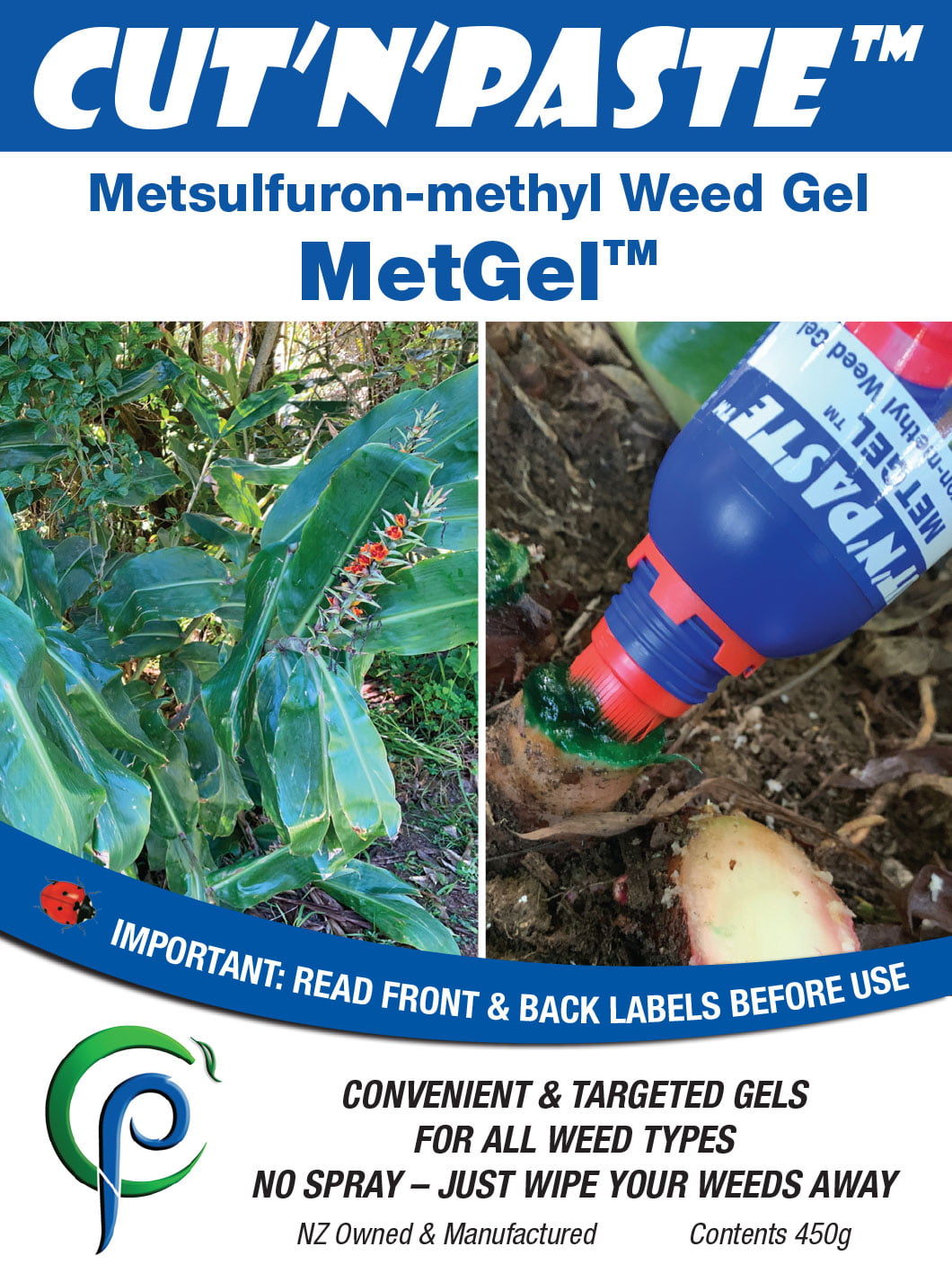
Gingers plants are easily dealt with using Cut'n'Paste MetGel Weed Gel.
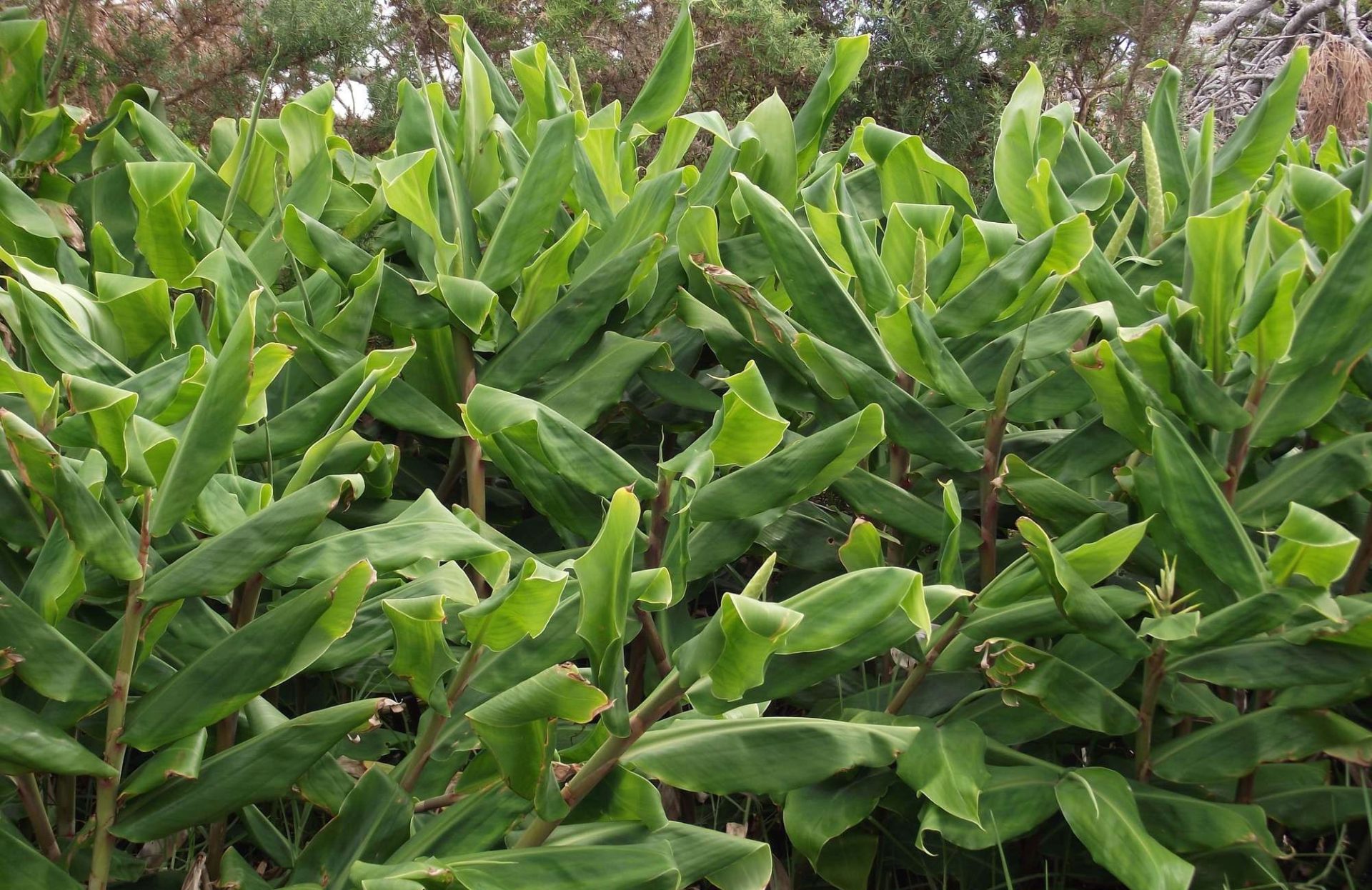
Identification of Wild Ginger is very simple. Here is a key that you can use for a more systematic ID
Wild ginger can still successfully multiply when rhizomes are damaged. Young plants are very palatable to livestock, and both species tend to invade all areas where stock are excluded, including within native bush and on road sides and riverbanks. Due to its all smothering nature, it will eventually replace all other species, being extremely shade tolerant, somewhat tolerant of frost and drought and can withstand immersion in sea water. It is a terrible pest plant in native bush and wetland areas where it tolerates wet and dark conditions excluding native species.
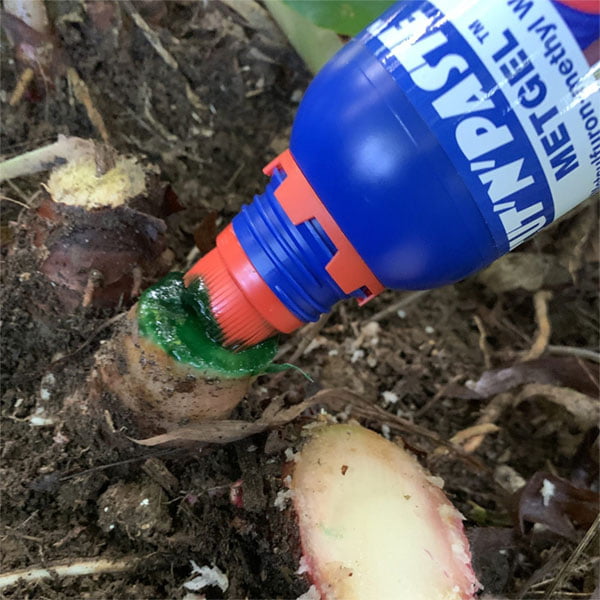
Cut’n’Paste the stumps with MetGel.
Slice through the rhizomes, the bulbous snaking roots that are like the ginger you buy at the shops, and apply MetGel to the cut surface. Try to make the cuts level so the gel doesn’t run off.
When you work on a large patch start at the bottom and throw the slash behind you as you go working systematically up the slope or across the flat ground. Use one of our serrated saws to cut through them neatly and efficiently.
Both species of wild ginger are non-woody perennials, growing up to 2m tall from thick-branching rhizomes (swollen underground stems). Their dense underground root system spread up to one metre deep excluding all other species. Both species produce shiny leaves 20 to 45cm long.
Kahili ginger flowers January to March and produces scented, lemon and yellow flowers with conspicuous red stamens, followed by fruiting spikes with fleshy orange fruits. Yellow ginger produces scented, cream coloured flowers in clusters, from May to June and does not produce fruit.
Both species prefer forest environments, where soils are fertile and damp, thus wild ginger has been termed a ‘forest invader’. Areas where it can commonly be seen growing include forests, streamsides, alluvial forest, light gaps and gullies. It cannot tolerate very dry or rocky areas, due to the generally low fertility of the soil in such environments.
No products in the cart.